

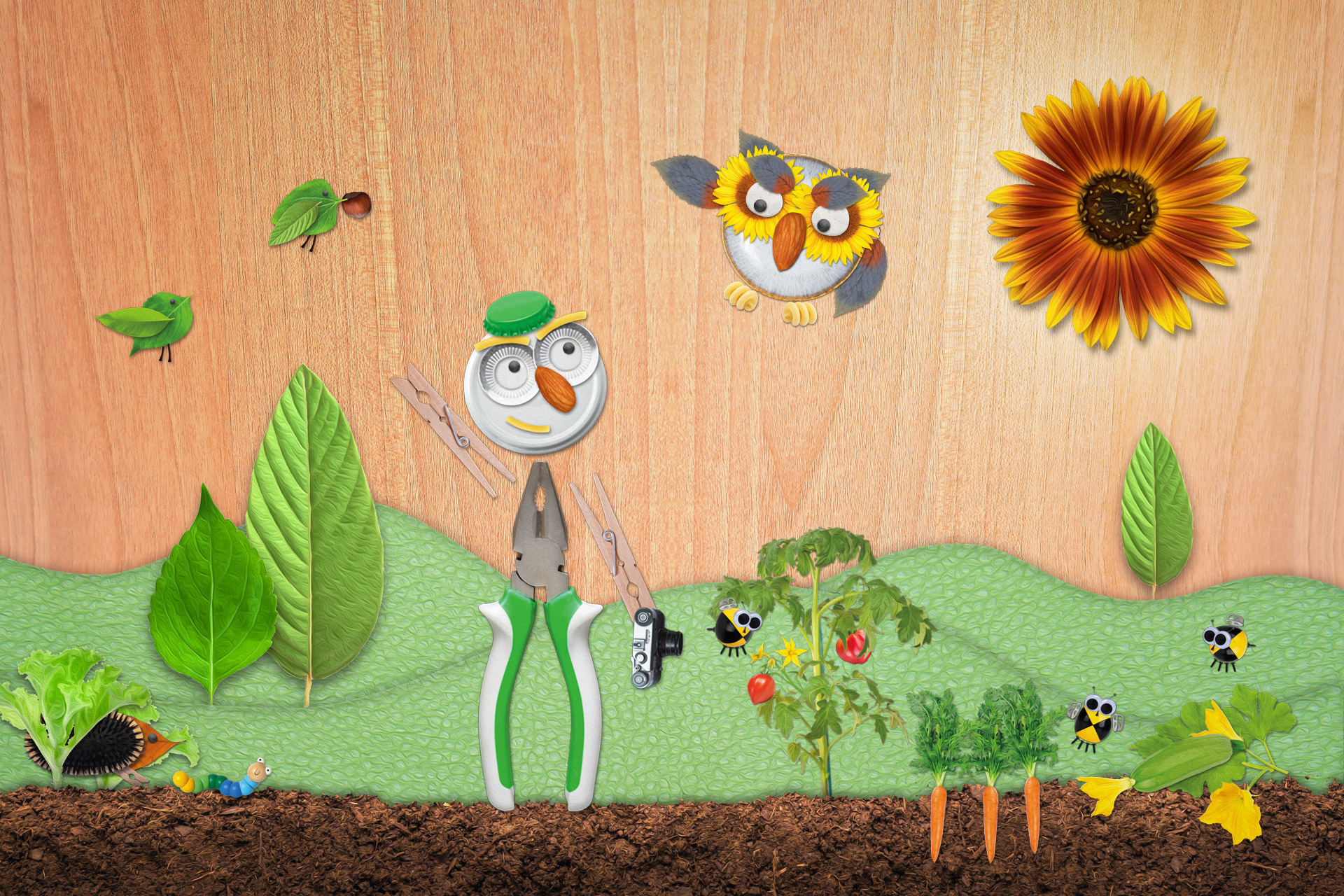
Les Beaux Jours (Brighter Days)
We all carry within us
a garden ready to be cultivated.
Crédits : Les Beaux Jours
The story
My dad works at an exhibition dedicated to dinosaurs, but this job bores him deeply. What he loves most of all is watching nature change with the seasons. Sometimes, all it takes is a tiny seed to change things! With it, you can grow a vegetable garden, but you can also nurture the garden you carry within yourself.
.jpg)
Practical informations
- Duration: 35 minutes
- Frame: FLAT 1998x1080px
- Sound: Stereo
- Dialogues : No dialogues (french version available)
- Animation technique: Object photo animation
- Production country: France
- Production year: 2025
- Audience : From 3 years old
The team
- Story and direction: Michaël JOURNOLLEAU
- Animation and video editing: Michaël JOURNOLLEAU
- Sound effects and audio mixing: Baptiste KLEITZ
- Voice and mouth sounds: Juliette LEPIC
- Original Music: Aurélie CHALUT NATAL
- Singers: Juliette LEPIC and Serge LEPIC
- Sefl Production : Michaël JOURNOLLEAU
Trailer
Images
.jpg)
.jpg)
.jpg)
.jpg)
.jpg)
.jpg)
.jpg)
.jpg)
.jpg)
.jpg)
.jpg)
.jpg)
.jpg)
.jpg)
.jpg)
.jpg)
.jpg)
.jpg)
.jpg)
.jpg)
.jpg)
.jpg)
.jpg)
.jpg)
.jpg)
.jpg)
.jpg)
.jpg)
.jpg)
.jpg)
.jpg)
.jpg)
.jpg)
.jpg)
.jpg)
.jpg)
The film on screens
Festivals selections and screenings
Ratatam
Festival for young audiences - Le Haillan (France), 2026
- Screening with the film crew and Q&A session with the audience on Sunday, February 2026 at 11am
- School screening
GOLDEN KUKER
17th international animated film festival - Sofia (Bulgaria), 2026
Category : short animated film made for kids
International Film Festival
(whose name I must keep secret for the moment) - Germany, 2026
Category : My first Cinema Visit
AIFF 2026
Ahmedabad International Film Festival (India), 2026
FICIJ Calibelula 2026
Calibélula, 10th Calibélula: Festival Internacional de Cine Infantil y Juvenil (Santiago de Cali – Colombia), 2026 septembre 28th to october 2nd
Young Audience festival "Les P'tits Mordus"
25 movie theaters "Plein Champ" - Auvergne (France), 2027
Contact
If you would like a link to watch the film or simply want more information, please don't hesitate to contact us!
Download
Director’s statement
Michaël JOURNOLLEAU
Les Beaux Jours is an introspective animated film that immerses us in the life of a little girl through the lens of her imagination. Using objects she finds throughout the rooms of her house, she creates characters and sets, bringing them to life before our eyes to share both her joys and her sorrows.
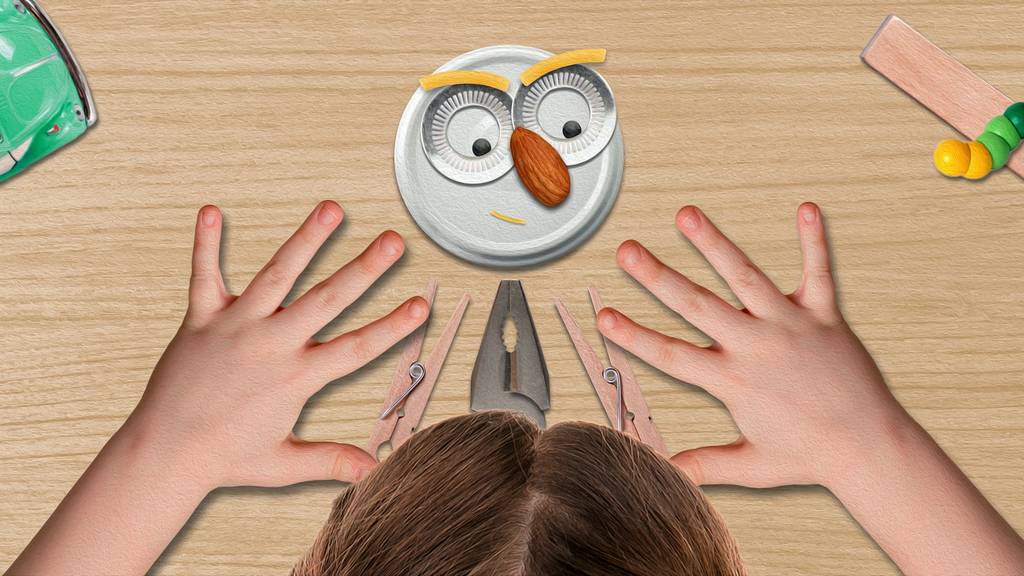
At an age when many concepts still hold no real meaning, the film explores how the child perceives the world around her in her everyday life. The little girl shares what she has understood or discovered about the lives of animals, nature, the seasons… as well as friendship and the importance of helping others. She also expresses, in her own way—with lightness and humor—her feelings about her father’s suffering at work. In a child’s mind, things are much softer and funnier than in the adult reality. It is through the contrast between these two perspectives that the little girl imagines a better world, where her father, passionate about gardening, can finally find happiness and fulfillment.
On the surface, Les Beaux Jours appears to be a story in which children simply enjoy the funny adventures of several characters made from objects brought to life. But the film offers a deeper reading: it draws a parallel between the seeds we plant in the soil to grow a plant and those we sow in our minds to build ourselves or learn to adapt to change. In both cases, it is something to nurture, and its growth takes time. Beyond entertainment, the film also encourages dialogue between children and adults and invites reflection on how others perceive the world.
Themes addressed in the film
Friendship
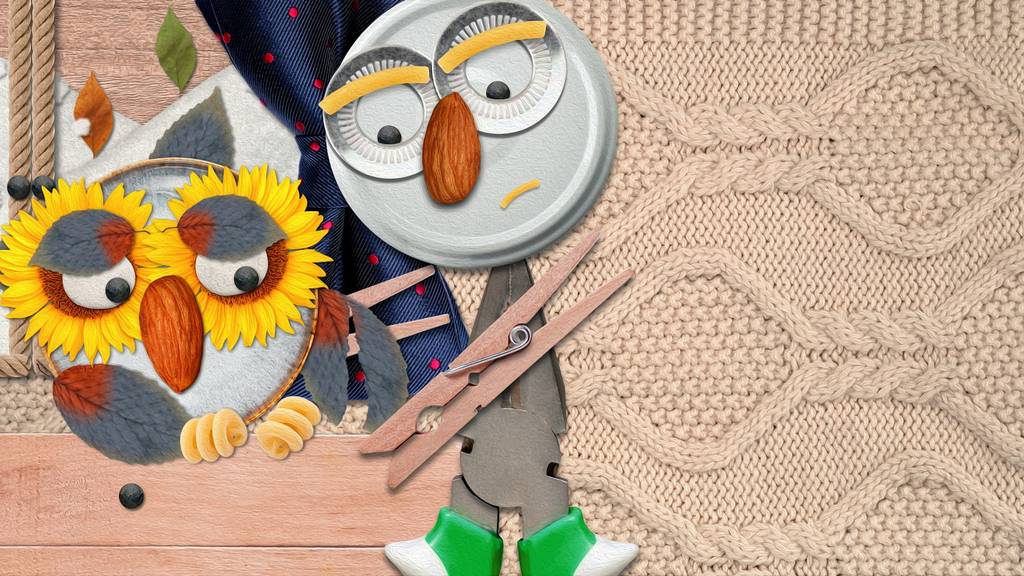
This theme is a classic in children’s films. In Les Beaux Jours, it is expressed through an unexpected encounter and the opportunity for the main character to help an injured bird. This act becomes the foundation of their relationship, which will later become reciprocal when the bird also has the chance to help its rescuer in return. From that point on, the two characters become inseparable. But when the bird is fully recovered, its wild nature takes over, and it regains its freedom, away from its friend. Friendship also means accepting that the other may leave if it is for their own good… Nevertheless, the memory of this bond remains, and the bird finds a way to return and spend joyful moments with its friend every winter, awaiting the beautiful days of spring.
Nature, animals and the cycle of the seasons
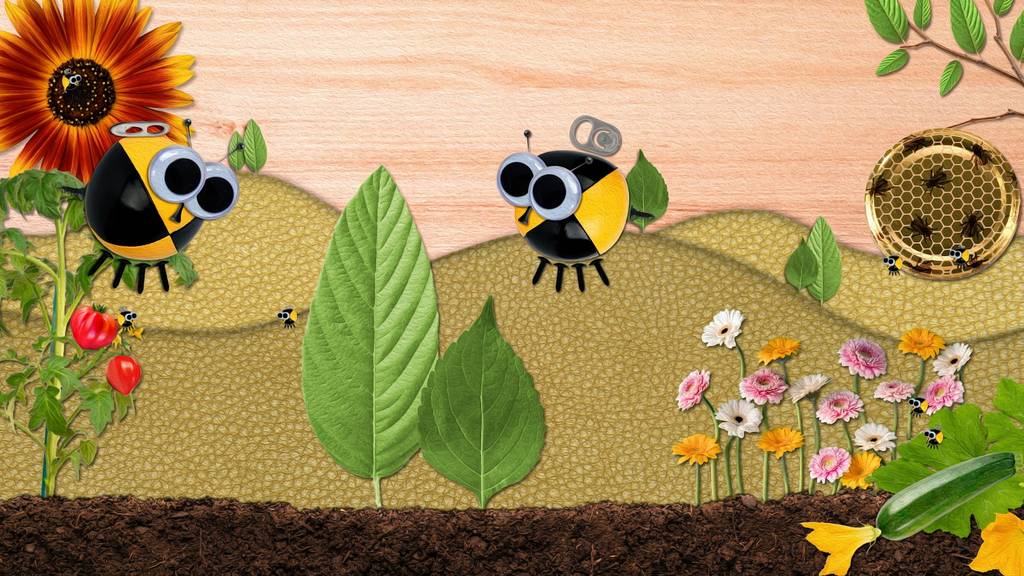
Nature is ever-present in Les Beaux Jours, as the film unfolds over the course of a year, with the sets and colors evolving to reflect the seasons and the lives of animals. While the film begins in the snowy winter, the story truly comes to life with the arrival of spring. At that moment, the main character plants her first seed in the ground to start her vegetable garden, unknowingly also laying the foundations for her future life. The beautiful days of spring become the stage for the growth of the first crops, leading to the summer’s apotheosis and its vegetable harvest. Over time, we see the main character herself develop mentally, following the slow rhythm of nature and the ups and downs of her garden. The arrival of autumn marks the end of the growing season and a time of reflection: a new life, far happier than at the beginning of the film. The film concludes just before the winter pause, thus closing the cycle of the seasons.
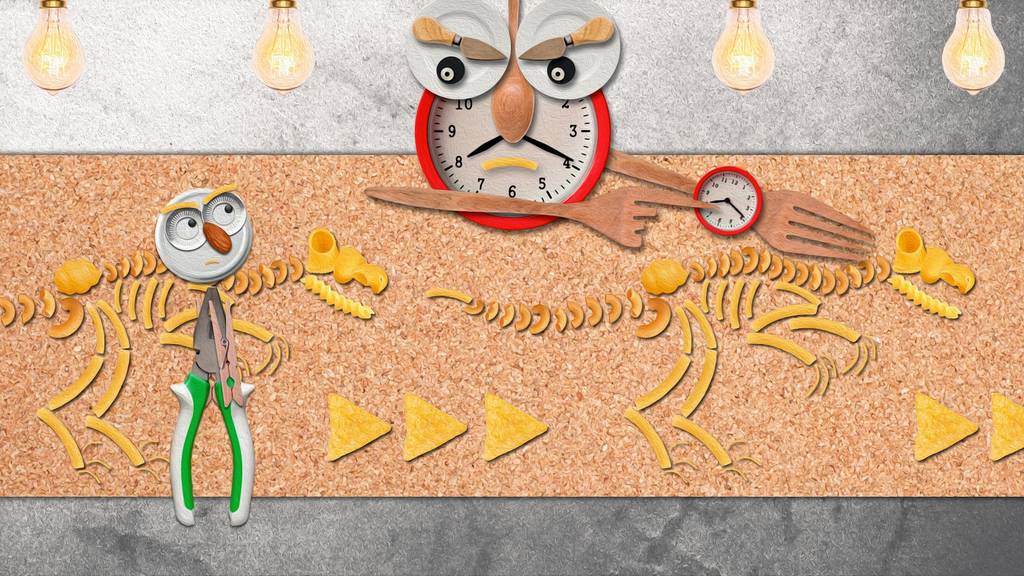
In the background, work and resilience
This theme is rarely addressed in films aimed at young children. Yet, it is not uncommon for adults to talk about their work in their presence. For the youngest viewers, the very concept of work remains abstract, and this is perfectly normal. The film does not aim to explain what work is to children, but rather to explore what they might imagine when hearing adults speak about it—whether it is fulfilling or, on the contrary, a source of suffering. Les Beaux Jours draws on children’s imagination to approach this theme with humor, lightness, and optimism. While work may appear at the beginning of the film as a difficulty for the main character, it is another kind of work, one that gradually matures in her mind, leading her to flourish by the end. In this way, the title Les Beaux Jours does not only signify the arrival of spring sunshine, but also the result of an inner journey toward a new and happier life.
Technical aspects
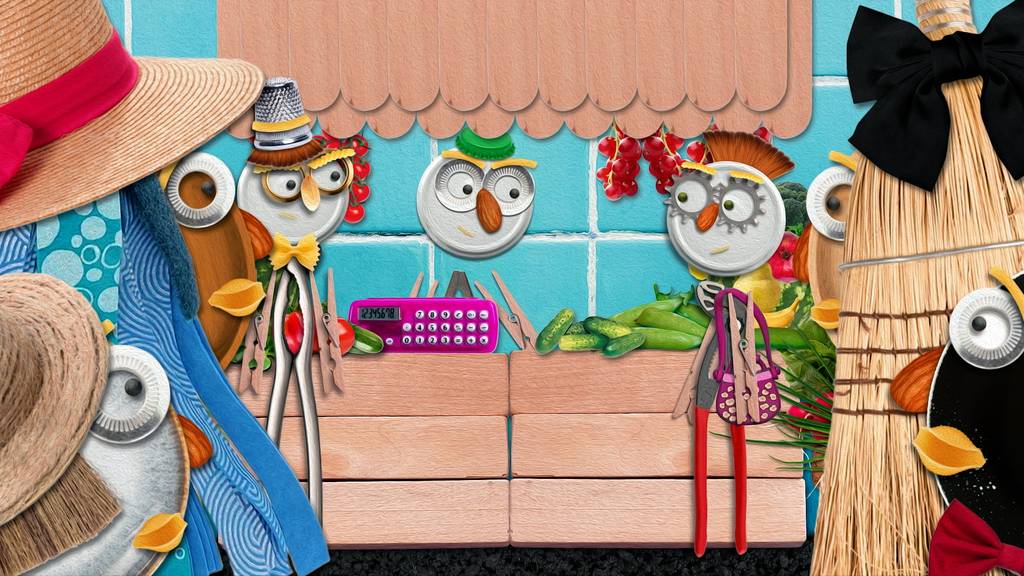
A rarely used animation technique
The film uses the technique of flat object animation, or more precisely, object photo animation. The choice of this technique evokes the compositions and collages created in preschool during the very first lessons in visual arts. It also allows the film to remain within a graphic universe familiar to children while moving away from traditional techniques such as hand-drawn animation or computer-generated imagery. Rarely used in animated films, the use of object photo animation surprises the viewer and serves the story’s purpose: to creatively illustrate the child’s imagination, which she is not yet able to express in words.
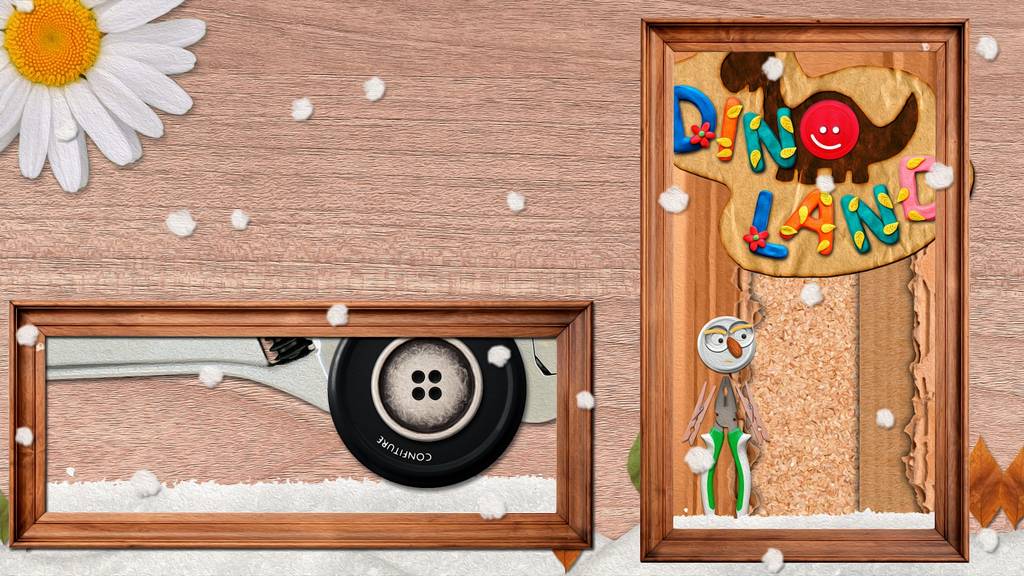
An editing style with « unusual transitions »
The film does not rely solely on classic “cut” transitions between shots. It also frequently uses a system of frames that appear, disappear, or move within the main frame. Inspired by comic books, this directorial choice is primarily intended to represent how ideas blend in the child’s imagination—like boxes she can open, close, and move at will. Each frame is carefully positioned to subconsciously guide the viewer’s eye to the point where the next scene will come to life.
The soundtrack
Created by Baptiste KLEITZ, the soundtrack is based entirely on hand-recorded sound effects made from objects, echoing the animation technique used in the film. The initial intention was for the sounds to evoke those a child might create while playing with whatever is at hand.
The choice to add the voice of a real little girl reinforces the idea that this entire story comes from her imagination. Even if we eventually forget it, it is she who tells the story, bringing objects on screen to life and playing with the sounds.
The music
The original music, composed by Aurélie Chalut Natal, is built around a recurring theme developed in various variations that give meaning to the images and enhance the emotion throughout the film. For the end credits, this music transforms into a full song in which the little girl and her father share themselves with each other through singing.
The film team

Michaël JOURNOLLEAU
Direction, animation and video editing
Independent artist Michaël JOURNOLLEAU studied computer science with a focus on digital imaging and has worked in many areas of animated filmmaking: organizing an international festival, film distribution, running a cinema specialized in animated films… Although he began as a graphic designer, he later took the opportunity to work occasionally on short films as an animator and editor before finally taking the step into directing: Lili Pom, Si j'avais, Lignes de vie, Je suis un loup… At the same time, he resumed and developed animation workshops for young audiences in schools, leisure centers, and libraries. He began directing the film Les Beaux Jours in 2020 and continued it through self-production until 2025, working around the free time available between projects. With a runtime of 35 minutes, this film is the longest and most ambitious he has directed.
Filmography
- Les Beaux Jours (2025)
- Je suis un loup (2021)
- Lignes de vie (2016)
- Martin et la boîte à chagrins (2012)
- Le Pêcheur, les Pirates et la Sorcière (2010)
- Lulu le lutin (2009)

Baptiste KLEITZ
Sound effects and audio mixing
Foley artist, animator and director of claymation short films, 1990-2000
Assistant sound operator on feature films since 1994:
- « Vie privée » by Rebecca Zlotowski
- « La bête » by Bertrand Bonello
- « Anatomie d’une chute » by Justine Triet
- « Irma Vep, la série » by Olivier Assayas
- « Roubaix une lumière » by Arnaud Desplechin
- « Le chant du loup » by Antonin Baudry
- « Fleuve noir » by Erick Zonca
- « Cézanne et moi » by Danielle Thompson
- « Saint Laurent » by Bertrand Bonello
- « Maman » by Alexandra Leclère
- « Coco avant Chanel » by Anne Fontaine
- « OSS 117 Rio ne répond plus » by Michel Hazanavicius
- « Boarding gate » by Olivier Assayas
- « OSS 117 le Caire » by Michel Hazanavicius
- « Anthony Zimmer » by Jérome Salle
- « les sentiments » by Noëmie Lvovsky
- « y aura-t-il de la neige à noël ? » by Sandrine Veysset
- …
Sound recordist and sound editor on a fiction film
« Quand la mer monte » by G. Porte and Yolande Moreau
Cinema speaker
In the form of practical workshops (recomposition of soundtracks from film excerpts) in middle and high schools, but also leisure centers, ESAT or MECS, since 1998.
In the form of a training course for middle school teachers focusing on sound work in film.

Aurélie CHALUT NATAL
Original film music composition
Nicknamed "Lili," Aurélie CHALUT-NATAL has been immersed in music since the age of 8. She learned piano at a music school, then taught herself guitar, and later learned drums, harmonica, and saxophone. She has composed several songs about her personal experiences, kept private, and trained as a music therapist to use music in social work.
Over the past 25 years in the Paris region, she has performed in several music groups, at private parties, in restaurants, and in concert venues. She worked as a vocal coach for musicals at a music school for 10 years and also created and performed a show to promote bone marrow donation, featuring a song composed for the occasion: “Give, without ever expecting anything in return.”.
In Gironde for the past three years, she has been involved in an acoustic duo, a rock band, and the association Air&Co, a vocal group in which she creates vocal arrangements for multiple voices.
In summary: she loves creating music and performing, making vocal arrangements, and taking on musical challenges—the composition of the original music for the film Les Beaux Jours was yet another one!
Acknowledgements
Corinne Coccoluto, for their daily support.
Maud Weicherding and Louis Ferré, for their guidance and valuable advice.
Fabrice de la Rosa, for having given me a taste for animated cinema and for his valuable advice.
Aurélie Barre and Serge Lepic, Juliette Lepic’s parents, for their trust and availability.
Agnès Mouton, from the association En quelques mots, for her proofreading and corrections of the french texts accompanying the film’s communications.